Bees, wasps and the soffit line in a Cleveland summer
By July the calls stop being about attics and start being about the eaves.
September 15, 2026 · 4 min read
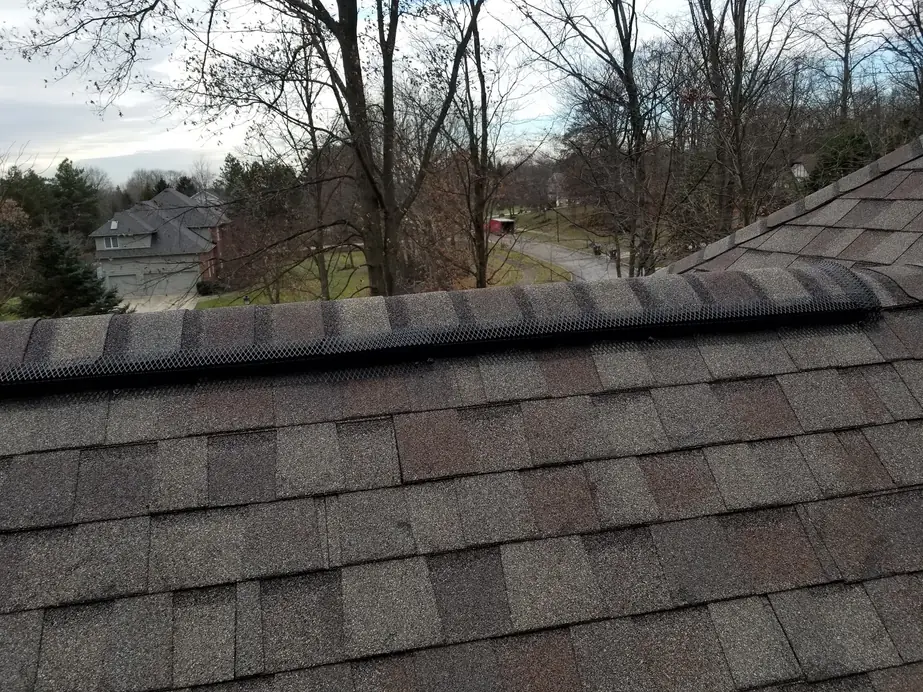
There is a rhythm to this trade in Northeast Ohio. Spring is ants and attic wildlife. Late summer belongs almost entirely to things that sting, and they concentrate in a very particular part of the building.
Why always the soffit
The underside of a roof overhang is close to ideal for a stinging insect. It is sheltered from rain, it is warm because the roof above it has been in sun all day, it is out of the wind, and it is high enough that almost nothing disturbs it. Add any small gap where the soffit meets the wall or where a fascia board has pulled slightly, and you have a cavity that is defensible and roofed.
That is the same logic a raccoon applies to a roof vent, which is why this business handles both halves of the problem. The building has a small number of weak points, and everything that wants to get in converges on them.
Telling the two situations apart
The single most useful distinction a homeowner can make is between wasps and honey bees, because the correct response is genuinely different.
Wasps, including paper wasps and yellow jackets, build a paper nest from chewed wood fibre. A colony lasts one season and dies off, the nest is not reused, and the insects are noticeably aggressive when the nest is approached, particularly late in the year when the colony is large and the food supply is thinning. Yellow jackets in a wall void are the ones that produce the alarming calls, because the entry hole can be small and the nest behind it very large.
Honey bees are a different proposition. They are less inclined to bother you, they are working rather than patrolling, and a colony that has established in a wall will have built wax comb and stored honey. That colony is intended to persist through winter.
Why a honey bee colony is a removal, not a spraying
This is worth understanding before anyone touches it. If a honey bee colony inside a wall is simply killed in place, the comb and the stored honey remain in the cavity with nothing maintaining the temperature. Honey that is no longer being tended will run, and it runs downward into the wall and eventually through the plaster.
It also continues to smell strongly of honey, which in practice means the same cavity is found and reoccupied, or robbed out by wasps and by other bee colonies. The people who have lived through this describe it as a far worse problem than the bees were.
So a honey bee colony in a structure is handled as a removal job with the comb taken out and the cavity cleaned and sealed afterwards, which is the same envelope work described on the clean up and sanitation page. The humane instinct that governs the wildlife side of this business applies here too.
What else arrives at the perimeter
Stinging insects rarely come alone in an exterior treatment. A typical summer call around a Greater Cleveland property covers several things at once: wasps or bees at the roof line, ticks in the transition zone where mown lawn meets longer growth or woodland, mosquitoes wherever water is standing, and stink bugs massing on a sunny wall as the nights start to cool.
One customer had exactly that combination treated on a single visit, bees plus ticks plus stink bugs around the exterior of the house, which is much more representative than treating any one of them in isolation.
What is worth doing yourself, and what is not
- Do empty standing water weekly, including plant saucers, blocked gutters and anything holding rain
- Do keep the strip where the lawn meets longer growth cut back, because that is where ticks wait
- Do note the exact entry hole if you can watch it from a safe distance, because it saves real time
- Do not attempt a nest inside a wall void from a ladder, which is how most stings in this trade happen
- Do not seal an active entry hole, because the colony will simply come through the plaster into the room
That final point catches people out more than any other. Blocking the outside hole on an active wasp nest does not trap the problem outdoors. It redirects it inward.
Timing
Wasp nests are far easier and far safer to deal with early, when the colony is small. By late August a yellow jacket nest can hold thousands of insects, and both the risk and the work go up accordingly. If you have noticed steady traffic in and out of one point in the roof line, it is better handled now than in a month.
Catch A Critter covers Cuyahoga, Lake and Geauga Counties and answers at any hour on (216) 323-2045. Licensed and insured, working out of Beachwood since 2005.
Catch A Critter, (216) 323-2045
Call (216) 323-2045More articles
What the noise in your attic is telling you
Almost nobody calls having seen the animal. They call because of a sound, and the sound is usually the best evidence there is.
Why sealing matters more than trapping
An attic was never the animal's idea. It was a gap at a roof vent, a lifted ridge line, or an uncapped chimney.