Why sealing matters more than trapping
An attic was never the animal's idea. It was a gap at a roof vent, a lifted ridge line, or an uncapped chimney.
September 15, 2026 · 4 min read
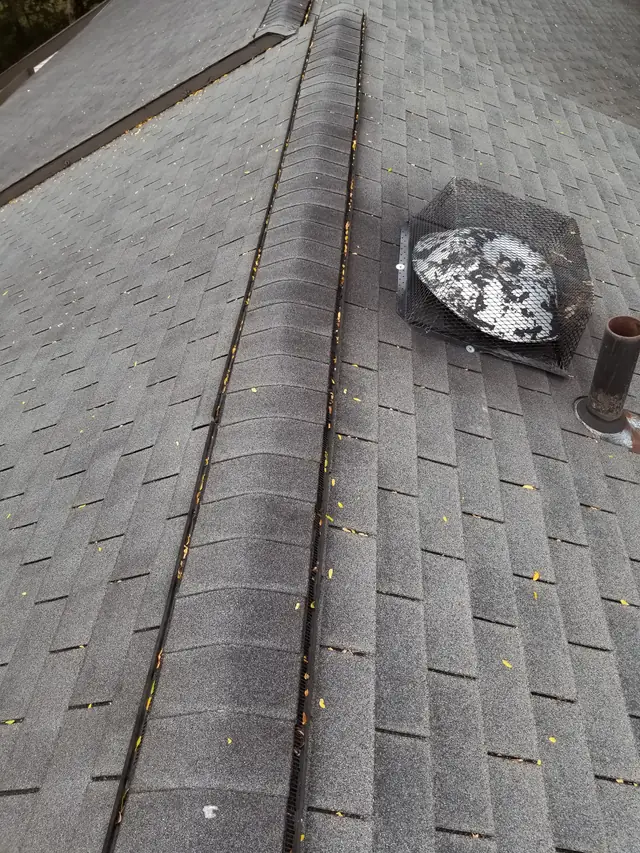
There is a version of this work that ends when the truck pulls away with the animal, and plenty of people have paid for it. It feels like a finished job. The noise stops, the house goes quiet, and for a few weeks or a few months everything is fine.
Then it starts again, and the second call is usually a different animal entirely. That is not bad luck. It is the predictable result of solving the occupant and ignoring the opening.
The building is the actual problem
No raccoon has a particular attachment to your house. What it has is a requirement: somewhere warm, dry, defensible and difficult for anything larger to reach. A roof space meets that specification almost perfectly, which is why it is competed over.
So when a gap exists at a roof vent, along a ridge line that has lifted, at a soffit corner where the wood has gone soft, or at the top of an uncapped chimney, that gap is not a one time vulnerability. It is a standing advertisement, and in Greater Cleveland there is a healthy population of raccoons, squirrels, bats and birds reading it every season.
Remove the tenant and leave the door, and you have not fixed anything. You have created a vacancy.
What exclusion actually involves
The trade word for closing a building properly is exclusion, and it is more specific than it sounds. It is not caulk and hope. The materials have to be things an animal physically cannot reopen, which in practice means steel mesh and hardware cloth rather than foam, plastic or timber patching.
A raccoon can pull apart most of what a homeowner would reach for. Squirrels and rats will simply chew through anything softer than metal, and they will do it at the same spot, because the scent trail is already there telling them it worked once.
Mesh fitted over a roof vent, screening along a ridge or a soffit run, and a proper cap on a chimney flue are the common answers. They look like small pieces of work, and they are the difference between a job that holds and a job you repeat.
The sequence matters as much as the material
Here is the part that separates careful work from fast work: sealing a building while something is still inside it is worse than not sealing it at all.
An animal shut into a roof space does not accept the situation. It will work at the weakest point until it is out, and the damage it does on the way out is routinely more expensive than anything it did while it was living there. If it does not get out, you have a dead animal in a ceiling cavity, which becomes an odour problem, then a fly problem, then a demolition problem.
In spring the stakes are higher again, because sealing an adult out and leaving a litter sealed in is both a cruelty and, within a week, the single worst version of this job.
So exclusion goes on last, deliberately. The occupants come out first, the roof space is confirmed clear, and only then is the envelope closed. A one way door fitted to an active entry is a useful middle step, because it lets an animal leave under its own power and will not let it back in, but it is only honest to fit one once you are confident nothing is left inside that cannot use it.
What a proper inspection is looking for
Most buildings have more than one way in, and the one you found is rarely the only one. A roofline is a long thing with a lot of penetrations in it.
- Roof and gable vents, particularly where screening has rusted or been pushed in
- Ridge lines and the seams where two roof planes meet
- Soffit and fascia corners, especially where there has been water damage
- Chimney flues without a cap, which are the most common bird and bat route in this region
- Gaps at the foundation line, around utility penetrations, and behind gutter runs
That is why the first visit on any job here is an inspection rather than an estimate over the phone. You cannot price a roofline you have not looked at, and you certainly cannot close one.
It is the cheapest part of the whole thing
Sealing is usually a modest piece of work compared to the removal and the clean up that go with it, and it is the only part that changes the future. Everything else addresses what already happened.
Catch A Critter has worked from Beachwood since 2005 and finishes every job at the building rather than at the truck, across Cuyahoga, Lake and Geauga Counties. If you have already had something removed by somebody else and nothing was ever closed up, that is a very normal call to make on (216) 323-2045.
Catch A Critter, (216) 323-2045
Call (216) 323-2045More articles
What the noise in your attic is telling you
Almost nobody calls having seen the animal. They call because of a sound, and the sound is usually the best evidence there is.
Bees, wasps and the soffit line in a Cleveland summer
By July the calls stop being about attics and start being about the eaves.